- Call us+61425276324

Most coaches obsess over their funnel.
“Should I run more ads?”
“Do I need a better webinar?”
“Maybe it’s the landing page…”
But the truth is, most marketing offers don’t fail because of bad tactics. They fail because they don’t respect the journey people take before they buy.
There’s a psychological sequence that moves a stranger from “never heard of you” to “raving fan who tells everyone.” Ignore it, and your marketing feels like shouting into the void. Follow it, and suddenly everything clicks, your emails convert, your calls close, your clients stick around.
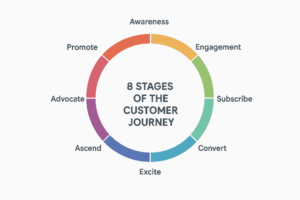
In this blog post, let’s unpack the 8 stages of the customer journey through a copywriter’s lens. You’ll see why the right words at the right time are worth more than any hack or funnel template.
Stage 1: Spark Curiosity (Awareness)
Nobody buys from you if they don’t even know you exist. But awareness isn’t just about showing up, it’s about making people care enough to stop scrolling.
The goal here isn’t to sell. It’s to enter their world with relevance and intrigue.
At this stage, your copy should whisper: “I see the problem you didn’t realize you had.”
Stage 2: Earn Attention (Engage)
Awareness gets you a glance. Engagement earns you a moment of trust.
Think of this as the “value handshake.” It’s when people lean in because you gave them something useful or entertaining.
The copy angle here? Don’t just tell, teach. People remember the brand that gave them clarity, not the one that bragged about their features.
Stage 3: Invite Them Closer (Subscribe)
Now you’ve earned interest, you ask for a small commitment: an email, a follow, a DM. This isn’t about the “lead magnet”, it’s about the promise behind it.
Copy at this stage needs to answer: “Why should I trade my attention for your guidance?”
Stage 4: Build Trust Through Action (Convert)
This is where people stop being “leads” and take their first real step—often a small purchase or a booked call.
The key? Reduce friction while amplifying urgency.
The copy needs to bridge belief: “You’ve tested the water, it’s safe to swim deeper.”
Stage 5: Deliver Delight (Excite)
This stage is where most businesses lose momentum. The first paid experience sets the emotional tone: disappointment kills, delight multiplies.
Copy isn’t just for sales, it’s for reaffirmation.
Here, words reinforce the decision. You want clients thinking: “Yes, this was the right choice.”
Stage 6: Elevate the Relationship (Ascend)
Once you’ve earned excitement, the next natural step is to offer something deeper. This isn’t “upselling.” It’s advancing their transformation.
The copy should show: “The path doesn’t stop here, it gets even better.”
Stage 7: Turn Clients into Storytellers (Advocate)
At this stage, people love what you do. But love doesn’t automatically turn into advocacy, you have to make it easy to share.
Copy here should act as a mirror: reflecting the client’s success so they feel proud to share.
Stage 8: Build Raving Fans (Promote)
Advocacy is passive. Promotion is active. This is when clients start bringing people to you because they believe in your mission.
Copy here should appeal to identity: “By promoting this, you’re part of something bigger.”
Why This Map Matters
Most businesses only write for Stage 4 (Convert). That’s why their marketing feels like it’s always pushing.
The real money, and more importantly, the real trust, comes from writing across all 8 stages. Different stages demand different tones: curiosity, clarity, confidence, celebration.
When your copy respects the journey, strangers don’t feel sold to. They feel guided.
If you’re wondering where your emails, landing pages, or offers might be silently leaking revenue… drop me an email. I’ll do a quick review and show you which stage is costing you the most.