- Call us+61425276324

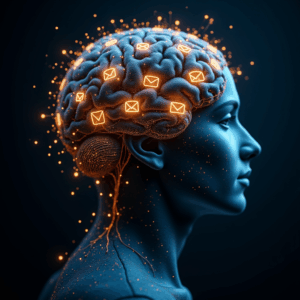
Behavioural Triggers That Turn Emails Into Addictive Experiences
Every inbox tells a story, though most go unnoticed. Some messages drift past like whispers in a crowded room, easily ignored, while others arrive like a spark in dry kindling, drawing attention with a magnetic pull that almost feels unfair.
But this isn’t luck.
It isn’t simply clever copy or a snappy subject line. The emails that truly engage tap into something deeper: behavioural triggers that align with how our brains process emotion, curiosity, and identity. When you understand these triggers, you stop chasing metrics for their own sake. You start crafting experiences that readers want to enter, to linger in, and to remember.
Beyond the Click: Why Most Emails Don’t Stick
Open rates are the shallow metrics everyone talks about, but engagement, the kind that changes behaviour, tells a much richer story.
Many emails get opened briefly, glanced at, and then vanish into the mental noise of an already crowded inbox.
Why?
Because engagement isn’t about words alone. It’s about how those words intersect with the human mind. Behavioural triggers create that bridge. They guide attention without forcing it, spark emotion without overwhelming, and pull readers toward action while keeping them in control.
In short, these are the mechanisms that make an email feel alive rather than just functional.
The Attention–Emotion Loop
Your readers filter out nearly all sensory input, letting only the personally relevant or emotionally charged break through.
That’s why Apple rarely leads with discounts.
Their emails start with desire – a single image of a camera capturing golden dusk light, no caption, no hard pitch.
Your mind begins to construct the story, imagining yourself behind that lens, capturing your own perfect shot. Dopamine quietly spikes, even before you click.
This is where psychology and marketing converge. Emotion first, product second.
It’s what makes engagement inevitable.
The Anatomy of Emails That Hook
Emails that linger in memory aren’t simply informative. They deliver tiny bursts of emotional reward. Every scroll, every glance, every click is subtly guided by anticipation, delight, or the sense of being understood.
Curiosity and Reward
The human brain thrives on unresolved questions. A subject line that opens a loop “The One Mistake You’re Still Making…” triggers an itch of anticipation.
Click, and the reward resolves the tension. But the payoff must match the promise.
Airbnb excels at this balance by pairing curiosity with hyper-relevance. A subject line like “Still dreaming of your next getaway? Here are homes just like the one you saved” doesn’t just provoke curiosity; it promises a personalised reward. The brain experiences both suspense and satisfaction, creating trust while reinforcing engagement.
Pattern Disruption
Our minds are wired to seek patterns. Break the pattern, and attention snaps into focus. Glossier leverages this brilliantly, sending text-only emails after weeks of image-heavy campaigns.
A simple line like “Can we talk about skin?” interrupts expectation, pulls the reader out of autopilot, and draws them into a micro-conversation that feels intimate, human, and urgent – all without a single promotional image.
Micro-Narratives That Spark Emotion
Stories aren’t paragraphs of text but are emotion in motion. They are tiny journeys your reader can inhabit in a few seconds, yet remember long afterward. The simplest narrative structure works wonders – first, hook with desire, frustration, or curiosity; second, shift with insight, empathy, or a twist; third, reward with resolution, clarity, or transformation.
Apple’s “Shot on iPhone” campaign exemplifies this. Each image tells a story of human creativity. The product becomes secondary; the reader experiences themselves as the creator, subtly, viscerally, emotionally invested.
Emotional Archetypes That Move Readers
Contrary to what many experts tell you, people don’t act purely on logic. They act to affirm identity. Every successful email speaks to one of four archetypes, each triggering a different emotional pathway.
The Explorer thrives on novelty and curiosity. Brands like Airbnb and Notion appeal to the sense of discovery, inviting readers to uncover what they haven’t yet seen.
The Caregiver responds to empathy and connection. Calm and Headspace nurture trust and belonging, framing emails as quiet support, as though someone understands your struggle before you even articulate it.
The Hero seeks growth, mastery, and transformation. Apple and Nike tap into this archetype by inspiring confidence and possibility, making every click feel like a small act of self-empowerment.
The Rebel craves freedom and individuality. Liquid Death or Mailchimp appeal to autonomy and disruption, nudging readers to break norms, express themselves, and act boldly.
When your emails reflect these archetypes, they stop selling. They affirm the reader’s self-image, and affirmation, more than persuasion, drives long-term engagement.
Stacking Behavioral Triggers for Maximum Impact
The real skill lies in layering triggers, not applying them one at a time.
Combining scarcity with social proof works best when done with care. Scarcity generates urgency, while social proof reassures. The trick is balance: “Only 3 spots left, and every participant last quarter doubled their revenue” delivers urgency while anchoring trust. Readers feel compelled, yet safe.
Similarly, balancing novelty and familiarity creates an irresistible rhythm. Humans crave patterns but are captivated by subtle shifts. Glossier alternates tones – playful one week, educational the next – keeping readers on alert without feeling destabilised.
Timing amplifies triggers. Emails are only effective when readers are psychologically receptive. Send a FOMO message Monday morning, and stress may suppress engagement. Send it Friday afternoon, when anticipation and reward pathways are more open, and response rates can jump dramatically.
Making Emails Feel Personal, Even at Scale
True personalisation goes far beyond first names. It’s about aligning your message with how someone feels.
Casper’s abandoned cart emails do this elegantly: “Your bed misses you.” The product transforms into a small companion, not a commodity.
Voice matters too. Automation predicts behaviour but rarely feels authentic. Top brands write as if a thoughtful human.
Attentive, aware, empathic.
Composed in a way that the message was just for you.
Identity anchoring reinforces this effect. Phrases like “Founders like you know…” validate a reader’s worldview. Emails become mirrors rather than directives, subtly rewarding self-recognition and reinforcing trust.
Retention as the True ROI
Clicks are fleeting. Loyalty lasts. Behavioural triggers reach their full potential when they cultivate emotional memory – moments that linger long after the email has been read.
The brain stores emotion before logic. When emails inspire, comfort, or delight, they create memory and attachment. Minimalist Apple emails demonstrate this principle: a single line, a simple visual, yet engagement rates soar.
Listening to sentiment enhances this effect. Metrics tell what happened; emotion tells why it happened. Asking questions like, “Which email did you look forward to most?” invites readers to co-create the experience, deepening connection and reinforcing belonging.
Behavioural feedback loops further cement engagement. When readers see their past actions reflected in content, “We noticed you clicked here last time”, it signals care and attentiveness. Loyalty emerges quietly, organically, without overt selling.
FAQ
Why do some emails feel addictive while others fade away?
Because they tap into natural brain patterns: curiosity, emotional anticipation, and identity alignment. Every open becomes a small, rewarding experience.
How do I use behavioral triggers without feeling manipulative?
Focus on alignment and empathy. Triggers should enhance connection and clarity, never pressure.
Do I need a massive list to make these strategies work?
Not at all. Even small, thoughtful lists respond more deeply when emails speak to human behaviour and identity.
Which brands really master this approach?
Apple, Airbnb, and Glossier are standout examples. Each prioritises emotion over product, narrative over promotion, and human connection over automation.